• #458 (no title)
  • About
  • Blog
  • Contacts
  • Elementor #3247
  • Global Styles
  • Home
  • My Portfolio
    • Page Design
    • Writing
      • Graphic Design
    • Photography
  • Portfolio
  • Projects
  • #458 (no title)
  • About
  • Blog
  • Contacts
  • Elementor #3247
  • Global Styles
  • Home
  • My Portfolio
    • Page Design
    • Writing
      • Graphic Design
    • Photography
  • Portfolio
  • Projects

keep your memories alive

Reproductive Health

I Got Pregnant on Birth Control as a Mom. Here’s What It Taught Me About the Toll of an Unplanned Pregnancy

by Gillan Ritchie July 29, 2024
written by Gillan Ritchie

The air in the bedroom felt suffocating as I watched the timer, muted and off-camera during a work call. I felt my heart beating in my ears. The timer dinged as my co-workers continued chatting in the background, all of us equally unaware that my life was about to change.

I looked down at the pregnancy test resting on the desk. Two pink lines. 

It felt like the breath had been knocked out of me and I blacked out from sheer panic. Only when a coworker said my name did I snap out of it, squeaking out an answer before I placed myself back on mute, sobbing hysterically, cursing obscenities, and eventually, throwing up from stress. 

“How could this happen? We’ve been using Phexxi,” I thought to myself. 

Phexxi is an FDA-approved, non-hormonal birth control method, marketed as a reliable, hormone-free alternative to the pill. It’s a contraceptive gel that you insert into the vagina (using a pre-filled applicator similar to a tampon) any time between an hour and immediately before intercourse. Made up of lactic acid, citric acid, and potassium bitartrate, Phexxi is designed to lower the pH of the vagina and make it harder for sperm to move. This reduces the chance of the sperm fertilizing an egg during ovulation.

At the time, it was also my and my husband’s birth control of choice. Between our sons’ therapy sessions, educational support meetings, and multiple surgeries, our two beautiful boys kept us busy. We had decided that two kids were enough and our family was complete, but after 15 years of hormonal birth control, I had also decided to discontinue the pill due to unwanted side effects. I tried a copper IUD after the birth of our second child but I bled every day for months until it was removed. My midwife then mentioned Phexxi and we started using it in July 2022.

For more than a year, we followed the instructions closely. We never had any problems, until that October day in 2023. 

Initial claims made by Evofem Biosciences, the manufacturer of Phexxi, stated the contraception had an effective rate of 99 percent when used as directed. But Planned Parenthood found that Phexxi is only 86 percent effective overall because people can make mistakes administering it, and that means 14 out of 100 people get pregnant while using the product.

The Food and Drug Administration issued a letter in November 2023 that stated, “These claims [made in promotional material] create a misleading impression by overstating the efficacy of Phexxi. The 99 percent pregnancy prevention rate claimed in the brochure is based on efficacy ‘per act of sex’ which is not a validated measure to demonstrate the efficacy of contraceptive products.” Since then, Evofem Biosciences has updated their website and states an efficacy of 86 percent under typical use and 93 percent when used as directed. 

But it’s not just Phexxi users that experience birth control failure. The 2019 study “Global Contraceptive Failure Rates: Who Is Most at Risk?” found that across multiple birth control methods, younger contraceptive users had failure rates 10 times higher than older users. These failure rates could be attributed to younger women being more sexually active, more fertile, or more likely to incorrectly administer birth control. In addition, the Guttmacher Institute published a study in 2008 showing that one in 10 unplanned pregnancies occurred even under optimal contraceptive use.

Kaitlynne Garner, 28, of Edinburg, Virginia, had been using birth control pills for more than a decade when she and her fiancé found out they were expecting their first child in April 2023.

“I was mostly nervous but also excited,” Garner tells SheKnows. “I looked at it almost like it was meant to be.” 

Garner says she was diligent, using a phone alarm to remind her to take Tri-Sprintec, and she avoided food and beverages that contained ingredients that may affect the efficacy, such as charcoal  or grapefruit. Her doctor was never able to figure out how she became pregnant on birth control.

“When I asked, [the doctor] said that sometimes, it just happens,” Garner said. “They suggested that my body had built immunity to [the birth control pill] over time.” 

Garner’s baby stopped growing at six weeks, but she didn’t miscarry until after her first appointment. She said she was 10 weeks along when the doctor did the first ultrasound and found that there was no heartbeat.

“[The miscarriage] was harder then than it is now,” Garner said.  

She and her fiancé realize now that birth control alone isn’t 100 percent effective, and they need to do more than rely on the pill to prevent future unplanned pregnancies. 

Christina Walz-Rios from Knoxville, Maryland, is a retired maternal and child health specialist. For almost 20 years, she worked with high-risk military families enrolled in a new parent support program. She estimates that she worked with around a dozen women who had unplanned pregnancies while using contraception during her career.

“The birth control pill is only 99 percent effective,” said Walz-Rios. “So, if you fall in that 1 percent, then it’s 100 percent of your life.”

Women who go on birth control don’t get the full picture, she adds. There’s a lot of misinformation out there, and contraceptive users may assume that birth control is guaranteed to work. That may not always be the case. 

“When a patient goes to their doctor, there’s an allotted amount of time to be seen, and it’s often rushed,” she said. “It’s a combination of these women not getting the information that they need from their medical providers and not asking the right questions.”     

The issue has become more pressing in recent years. As more women lose access to reproductive options like abortion, understanding the full picture of birth control efficacy is critical when it comes to preventing unplanned pregnancies.

Too often, we get the information too late. After the initial shock of my own pregnancy wore off, I feverishly started researching Phexxi to understand what had happened. I uncovered women on TikTok sharing similar stories, which led to an Rolling Stone article in which users claimed they had gotten pregnant while using it just as I had. Complaints about Phexxi on WebMD stared back at me as I blinked back tears. Several posts on Reddit all came to the same conclusion: don’t use Phexxi.

I wish I had done more research before using the product because all the red flags were there. But Phexxi’s flashy “Welcome to My Vagina” commercials, featuring Annie Murphy from Schitt’s Creek, delivered enticing promises. Between those commercials, the pamphlet laying in my doctor’s office, and a quick conversation with my midwife, I was confident the product was for me. 

A year later, I was left feeling betrayed by a contraceptive that hadn’t worked. I spent the better part of my pregnancy angry and resentful because I had lost autonomy over my body. During the first 17 weeks of the pregnancy, I would get angry at the thought of eating. This feeling was not to be confused with morning sickness — I was hungry and rarely nauseous, but the mere idea of cooking meals and eating left me seeing red. Toward the end of my pregnancy, I tripped on a toy and sprained my ankle, and I was diagnosed with polyhydramnios, or excessive amniotic fluid.

But the pregnancy didn’t affect just me, it affected my whole family’s dynamic. We had to make adjustments to our small home that would accommodate our growing family. We watched as our two boys struggled with room sharing, and it was increasingly evident at how miserable they had become toward each other.

We’d been so busy teaching our boys to advocate for themselves that I never advocated for myself. I didn’t stop to ask questions and empower myself when it came to my reproductive system. At 33 years old, I never imagined experiencing an unplanned pregnancy — but now, every time I look at the face of our youngest, I fall in love.

An unplanned pregnancy left my husband and me moving through stages similar to that of grief: shock, denial, bargaining, anger, depression, reconstruction, and acceptance. Once we were able to move through those, we were able to discuss our options. We’re fortunate to have family nearby and a support network across the country to help us through this unexpected journey. However, we recognize that some women or couples may not be as fortunate as us. When faced with unplanned pregnancies, many families experience financial instability, lack of support, and even limited access to healthcare. It’s important for women to have open and honest discussions on the different types of birth control, the effectiveness and failure rates of it, and advocate for their reproductive health.  

July 29, 2024 0 comment
0 FacebookTwitterPinterestEmail
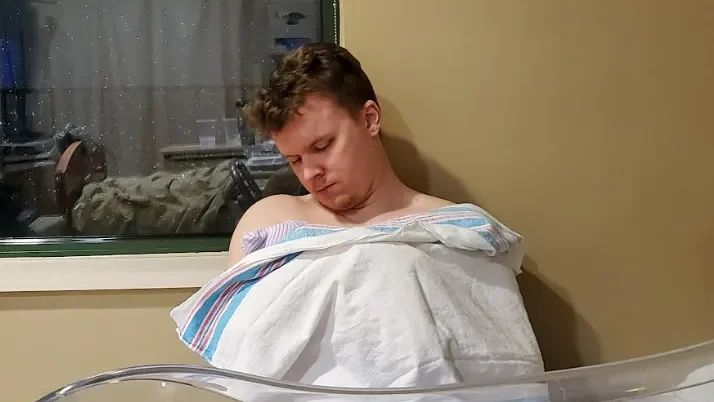
My husband doing skin-to-skin contact with our middle son in a Georgia hospital.
Parenting

My Husband Is A Parent Too — But You’d Never Know It Based On What People Say To Us

by Gillan Ritchie July 22, 2022
written by Gillan Ritchie

In early 2017, my husband and I sat in the OB-GYN’s office to confirm that we were pregnant with our first child. The room was littered with literature for new moms on birthing and breastfeeding classes, hospital tours and registration, and pamphlets on how to recognize postpartum depression. As we sat waiting for our ultrasound, my husband pointed out the lack of resources for men transitioning to life as new dads.

Even before I became pregnant, we had gotten a taste of just how infrequently dads and dads-to-be are welcomed into conversations about parenthood.

Prior to conception, bloodwork showed that my Anti-Müllerian hormone was too low for a 26-year-old like me ― my ovarian reserve was depleted and trying to conceive without medications or in vitro fertilization could be difficult. With referral in hand, I sat down to discuss next steps with a reproductive endocrinologist.

“My husband couldn’t make it to this appointment because he is on his way to work,” I told the doctor. “Can we call him? He wants to understand what is going on.” I was already stressed and overwhelmed sitting in the beige office. When my response was met with bewilderment, my stomach tensed up.

Taken aback, the doctor echoed, “You want to call your husband?” I was frustrated — I wanted to include my husband because we were trying to start a family, and I wanted people to start treating him like he mattered.

As we move away from the constraints and cliches of heteronormative relationships in society, men like my husband deserve more support as they become new parents, too.

My husband attended every appointment during the first and second trimester. During one visit, a nurse told him, “You don’t really have to keep coming to these appointments.” I could feel his mood shifting and see the mixture of emotions on his face — frustration, hurt, resignation. His role as a new dad had already been defined even before the baby was born — it was his “job” to work and financially take care of our family. My role as a new mother was to carry our son and bear the emotional labor of pregnancy.

I was so upset about being stereotyped by outsiders. I intended to work full time and maintain an equal partnership while raising our child with my husband because we are a family. We wanted people to understand that he wanted so much more than to just bring home the money — he wanted to be an active participant in our son’s life, whether it was doctor’s appointments, changing diapers, late-night feedings or touring day cares.

Professor Claire Hughes and her research team from the University of Cambridge found that if first-time parents had postnatal relationship problems, children were more likely to be worried, unhappy, or tearful, scared easily, or clingy in new situations. As a result of the University of Cambridge study published in August 2019, the researchers determined that support and resources need to be extended to new dads and focus on the well-being of both parents.

“For too long, the experiences of first-time dads has either been side-lined or treated in isolation from that of mums,” Hughes noted. “This needs to change because difficulties in children’s early relationships with both mothers and fathers can have long-term effects.”

As I laid there in labor four days shy of our scheduled cesarean section, the Labor & Triage nurse explained to my husband that after some drugs and a saline drip, they were able to slow, but not stop, my contractions and they were sending me home.

“We are not leaving this hospital,” I remember my husband saying just as another contraction hit me like a wave. The Labor & Triage nurse looked surprised by my husband’s firm tone as he explained why we had planned our C-section due to an organic spinal fusion in my lower back.

“I spoke with the doctor on call,” the nurse said when she returned to the room. “She is finishing up with her patients and then she’ll be down. We’ll start preparing you for surgery and the anesthesiologist will be in to go over everything with you.” My husband and I were a team ― we were having our child together and he was an active part of everything that entailed.

In the first few months after giving birth, my husband and I would take our son to his checkups with the pediatrician. I was required to complete a checklist for the doctor about my physical and mental well-being. These types of forms help doctors determine if new moms are experiencing postpartum depression and/or anxiety. The U.S. Preventive Services Task Force recommends that all women get screened for depression before and after giving birth. Currently, there is no assessment to screen new dads for PPD.

In 2019, the University of Nevada, Las Vegas, published a study in the Journal of Family Issues. The researchers, led by Couple and Family Therapy professor Brandon Eddy, explored issues that new dads experience, such as PPD. About 4% to 25% of new dads experience PPD according to the National Institutes of Health, but there are no common diagnostic criteria for paternal PPD. It’s well-known that new moms experience hormone fluctuations during the first six months, but dads can too. Studies show that dads can experience dips in testosterone and cortisol while oxytocin, estrogen and prolactin surge. A new dad is also more at risk if his partner is experiencing PPD.

“Half of all men whose partners have postpartum depression are depressed themselves,” said Will Courtenay, Ph.D., a licensed clinical social worker and founder of PostpartumMen.com. “Depression in both parents can result in devastating consequences for their relationship and especially for their children.”

UNLV’s research team reported that the surveyed new dads lacked needed resources to help recognize PPD, repressed their feelings, felt overwhelmed or resented the baby, and felt neglected by their wives, medical professionals and society.

And nowhere did this manifest more than public restrooms. We were dining out as a family when our oldest son was just a few months old, and it was apparent he needed a diaper change. My husband offered to take him so I could enjoy my hot meal. Shortly after leaving, my husband huffed back with our infant and complained about the lack of changing tables in the restroom. He ended up having to change our son in the trunk of our car.

My husband is not alone ― Donte Palmer, a dad in Jacksonville, Florida, posted a picture of himself squatting against a wall in the restroom to change his 1-year-old son across his lap in 2018. His picture went viral with the hashtag #SquatForChange. Palmer’s picture brought to light the lack of support for families and, as a result, Pampers pledged to install 5,000 changing tables in men’s restrooms by 2021.

We welcomed our second son in February 2021. After we were discharged from the hospital, we received resources from the American Academy of Pediatrics on how new dads can take care of mom and baby, but there were no tips on self-care for dads. It’s been four years since my husband became a parent and nothing has changed.

Dear society, it’s 2022 and now is the time to make postpartum support more inclusive and give parents the tools they need to communicate. Let’s stop relaying the ideology that a man must financially care for his family while the wife stays home. My husband and I both work full time, care for our son full time and maintain our household equally.

“Dads don’t matter ― our only job is to make money to support the family. That’s how people in society see dads,” my husband says. From picking out car seats to decorating the nursery, doctor’s appointments to birth classes, my husband was there every step of the way, helping me carry the emotional load of our pregnancies.

We both understand that society is always going to criticize our roles as parents, both individually and collectively. As our sons get older, we will tell them about our experience from pregnancy onward. We want them to live their best lives — no preconceived notions from outsiders or limited narratives. My husband and I hope that, one day, our sons can break down the barriers to gender equality and write their own narrative. Who knows? They could make a statement like Donte Palmer and truly make a difference.

This article was originally published in July 2022 on HuffPost Personal.

July 22, 2022 0 comment
0 FacebookTwitterPinterestEmail
News

Pet Industry Seeing Boom in Alternative Diets

by Gillan Ritchie April 21, 2022
written by Gillan Ritchie

Owners Turn Toward Paleo, Keto, and Grain-Free Diets

Wellness–it isn’t just for humans anymore. Since the pandemic, more people are focusing on physical and mental well-being. But improving the quality of life isn’t just about mankind. Exercise regimens and alternative diets have extended to furry, four-legged companions over the last two years. 

In 2021, nearly 1 million animals were adopted in the United States (U.S.) while birth rates declined–both statistics can be attributed to the pandemic. Many pet owners, which are younger adults, are devoting more time and consideration to what their companions consume. 

When Kelly Peak and her husband, Mike Tompkins, adopted their second greyhound, Bear, the animal rescue advised that Bear should be on an alternative diet because of his sensitive digestive system. Their other dog, Barney, was already on a grain-free diet so they decided to use the same food for Bear. However, Bear didn’t respond well to the diet.

“We tried various kinds of food and found one that he liked and didn’t throw off his stomach,” Peak said. 

Bear, now on a low-fat diet, is just one of many pets in the U.S. on an alternative diet. The pet wellness industry has been seeing a boom in raw food, vegan and vegetarian, gluten-free, and grain-free diets. There are even specialty items like immune support for dogs and cats and daily nutritional greens supplements.

FDA’s Guidance on Grain-Free Foods

With so many different food options available to pet owners, it can be hard to decide what to feed pets. The U.S. Food and Drug Administration (FDA) does not require pet food products to have pre-market approval. The FDA’s website states that products should be made out of safe ingredients and have an appropriate function within pet food. Outside of that, guidance from the FDA on pet food ingredients is vague. 

But in July 2018, the FDA announced its investigation of a potential link between grain-free diets and non-hereditary canine dilated cardiomyopathy (DCM). According to the FDA, anything that is labeled as “grain-free” contains high levels of peas, lentils, other legume seeds (pulses), and/or potatoes in various forms (whole, flour, protein, etc.) within the first 10 ingredients. DCM cases previously reported to the FDA include dog breeds that aren’t previously known to have a genetic predisposition to DCM.

Some pet health experts are cautioning against alternative diets due to misinformation on the internet and the lack of regulation currently from the FDA. Alternative diets–whether for humans or pets–aren’t backed by substantial research, and pets become at risk for potential health problems.

“Due to the potential link for grain-free and legume heavy diets (peas, lentils, etc) to cause diet-related dilated cardiomyopathy (DCM), we recommend feeding all the dogs in our care a complete diet including grains and ideally one of the three major brands (Royal Canin, Purina, and Science Diet) to avoid any potential risk for diet-related heart disease,” said Sam Orr, vet director of Angels Among Us Pet Rescue. ”We also consult with our valued vet partners for nutritional advice to make sure we are doing the best thing for each individual dog.”  

Grain-Free Food Business Continues to Boom

Despite the FDA’s investigation into grain-free diets and DCM, there has been a significant increase in the number and sales of foods and treats over the last decade. According to Dr. Stephanie Clark, PhD, CVT, PAS, CFS, Dpl. ACAS, board-certified companion animal nutritionist at BSM Partners, there is no research that indicates a definitive connection between grain-free diets and DCM.

“Our team of animal nutritionists, veterinarians, and veterinary cardiologists is undertaking projects to help bridge the gaps in DCM research,” Dr. Clark said. “We recently collected cases of DCM from around the country diagnosed by veterinary cardiologists and found no significant increase in DCM cases in recent years, while at the same time sales of grain-free pet food rose 500%. Another study we are actively working on is evaluating the relationship between nutrition and canine cardiac disease.” 

As misinformation continues to spread on social media platforms, pet owners feel a sense of distrust with their veterinarians and veterinarians feel frustration as a result. Animals have different dietary needs from humans–what works for pet owners will more than likely not work for their pet.

Diets such as raw food can be very dangerous for pets because of antibiotic-resistant bacteria in meats, and homemade meals lack certain nutrients. There are also certain foods that pets can’t digest and detoxify from their bodies such as onion and garlic. 

“At a September 2020 symposium on DCM hosted by Kansas State University, which brought together veterinary nutritionists, cardiologists, researchers, and personnel from the FDA, Dr. Steve Solomon, the director of the FDA’s Center for Veterinary Medicine, noted it is best to talk to your veterinarian about your dog’s specific dietary needs based on their health and medical history” Dr. Clark said.

Moreover, with no reason to believe pulse [lentils, peas, chickpeas, field beans, and cowpeas] ingredients are inherently dangerous, more research is needed to fully understand this issue.

Dr. Stephanie Clark

Every pet is unique and that means that their diet should fit their nutritional needs. Humans may benefit from certain diets and exercise regimens–but that doesn’t mean pets will. If a pet owner has questions about what to feed their companion, they should consult with their vet before making any lifestyle changes. 

This article ran in the April 2022 edition of HOME Magazine.

April 21, 2022 0 comment
0 FacebookTwitterPinterestEmail
Health

Healthy Hall: GoToHearing

by Gillan Ritchie April 20, 2022
written by Gillan Ritchie

Christopher and Danielle Campellone, owners of GoToHearing, have successfully helped treat hearing loss and tinnitus by fitting more than 700 new patients during the past year. Campellone and his wife, Danielle, opened the Gainesville-based practice in April 2021 with a goal in mind: meeting each patient’s individual needs no matter the cost. Christopher is a multi-state hearing care provider with more than 15 years of experience treating hearing loss with life-changing hearing care experiences. He specializes in healthcare through individualized care; telehealth communications; and has a deep passion for helping people hear better. 

Christopher and Danielle aim to educate people on the long-term effects of hearing loss and keep consumers away from predatory companies by advisings patients to research the company and provider. Christopher recommends that new patients undergo a complete hearing evaluation, including video otoscopy, to rule out wax and foreign bodies in the ear. Patients should also have a tympanogram to rule out issues with the middle ear, which could immediately become a medical referral to an ENT, for emergencies such as sudden hearing loss.  

Each GoToHearing patient undergoes a battery of tests using state-of-the-art equipment in a sound booth. The practice uses fiber optic otoscopy by Med-RX and the most advanced Tympanometry, InterAcoustics Titan, which offers 3D technology. 

“How a patient performs in a ‘complex [versus] a non-complex’ environment is huge,” Chris says. “But understanding where the patient is cognitively is the most important factor [that is] most overlooked. This only hurts the patient and sets up an unrealistic expectation, especially for a long-term user.”

Christopher tries to help patients avoid pitfalls such as: being treated too early, underfitting, professionals under testing, and unlicensed entities or providers. 

“I am a firm believer that our positions are critical to the success of the hard of hearing. We just can’t let up and most importantly, not become the pitfall,” he says. 

His concerns are focused on patients who are real people with real needs. Hearing loss significantly impacts those who experience it and how those patients process these feelings of loss. According to Chris, hearing loss is frustrating for those who have it and their loved ones. Recent research from Johns Hopkins shows that hearing loss is linked with walking problems, falls, and dementia.

“Brain scans show us that hearing loss may contribute to a faster rate of atrophy in the brain,” Chris says. “Hearing loss also contributes to social isolation. You may not want to be with people as much, and when you are you may not engage in conversation as much. These factors may contribute to dementia.”

GoToHearing patients encounter small and large obstacles throughout life. Chris’s responsibility is to make sure he helps those in need, no matter the cost, and brings patients joy and happiness. Chris and Danielle would like to recognize three patients, or hearing heroes, that have inspired them.

“These are people that inspire me every day to want to do a better job for the hard of hearing,” says Chris.

Carolyn Smith

Carolyn Smith, a resident of Hall County, suffered from chronic ear infections as a child. Coupled with typical age-related hearing loss, Smith was having extreme difficulty participating in and maintaining conversations with the people around her. She had met Chris and Danielle Campellone, founders of GoToHearing in Gainesville, at another office. When the Campellones opened their private practice located off McEver Road, Smith went to them for her hearing needs.

According to Smith, Chris and Danielle are dedicated to solving her problems and achieving the best possible result through a tailored wellness plan.

“Due to their personalized care …I am now able to clearly hear [the] TV,” says Smith. “[I] can adjust surrounding noise by the app on my phone and with the hearing aids connected to my cell phone, I enjoy clear telephone conversations.”

For Smith, remaining active and participating in groups is important to her and the hearing device gave her that ability.

“Never feel your problem is too severe for help,” she says. “They [Chris and Danielle] are trained and skilled in achieving each person’s best outcome. The personal care you receive at GoToHearing makes [the] experience so much easier.”

Linda Fowler

Linda Fowler, Hall County resident and Carolyn Smith’s sister, saw the positive impact that Chris and Danielle had on Smith’s hearing and quality of life.

In August 2021, Fowler reached out to Danielle at GoToHearing for newer, better hearing aids. “[I] can finally hear well,” Fowler says. “[It] makes life so much easier with great hearing aids.”

GoToHearing won Gainesville’s “Best of 2022 – Hearing Care Provider” for providing hearing aids and audiology services. “[Call] GoToHearing and enjoy life fully,” says Fowler.

BobbyLea Pennington

BobbyLea Pennington started going to GoToHearing in June 2021 after her previous audiologist retired. Pennington’s husband had to repeat himself frequently because of her hearing loss. She had seen ads for Chris and Danielle’s private practice and had driven by the building on McEver Road.

She knew she needed new hearing aids and another hearing test, so she called them. Chris listened to all of her concerns and how her hearing loss was affecting her everyday life. He created a long-term plan to address all of her needs and helped her select hearing aids that would support her.

“When you lose hearing, you never get back what you had when you were younger,” says Pennington.

Today, Pennington’s husband doesn’t have to repeat himself as often, and hearing soft noises is a marvel. She can adjust her hearing aids, like Smith, through an app on her iPhone. Pennington has had such a positive experience working with Chris and Danielle to improve her hearing. She says the process was easy and she’s glad she went to GoToHearing for her initial appointment. Pennington stresses how important it is to monitor age-related hearing loss. If something doesn’t feel right, call GoToHearing for a thorough exam.

“Do not delay getting a hearing test done,” Pennington says. “If you are young, protect that hearing. Once you have lost your hearing, you can never get it back.”

 As a Georgia Corporation, Christopher and Danielle Campellone are active members of the Chamber of Commerce, AAA BBB, State Licensed Specialists, Member of the International Hearing Society, the ACAO, Hearing Loss Association of America, and The American Tinnitus Association.

The full article originally ran in the April edition of Healthy Hall.

April 20, 2022 0 comment
0 FacebookTwitterPinterestEmail
News

Discovering Your Pet’s DNA

by Gillan Ritchie April 10, 2022
written by Gillan Ritchie

It had been almost two years since Lauren Kime and her family lost their canine companion. Loki, their 15-year-old rescue dog, was struggling with muscle and bladder control, and the family decided it was time to put him to sleep. 

In December 2020, Kime’s 6.5-year-old daughter started begging for a new dog and the family realized that they were ready to welcome a new four-legged member into their home. Kime logged onto Petfinder.com and found a 6-month-old female puppy available for adoption at their local shelter. They decided to head to the shelter to see if the puppy would be a good fit for the family.

“We saw her in the puppy room and they took her out to the room for a meet and greet,” Kime said. “She just was so friendly and licking everyone.”

A week after meeting with the puppy, Kime and the family brought her home. Kime’s daughter decided to name the puppy Ginger. 

“[My daughter] thought she looked like a gingerbread cookie and we thought ‘Ginger’ was appropriate with the holiday timing and her somewhat ginger coloring,” said Kime. 

DNA Testing Boom

DNA testing in dogs has been quietly happening for more than two decades–researchers were using methods to examine certain conditions in canines. But the industry took off in 2005 when scientists mapped out dog genes and then published the results. 

According to The Harvard Gazette, an international research team, led by scientists at the Broad Institute of MIT and Harvard, decoded the DNA of the domestic dog. Results of the study, published in the Dec. 8, 2005, edition of Nature, show genetic similarities between dogs and humans, and could lead to discoveries that improve the health of both species. 

If you have a mixed breed canine in your family and you’ve always wondered about their breed, then a doggie DNA test may be for you. Here’s the low-down on DNA test kits for your furry, four-legged friends.
Are dog DNA test kits regulated?
No. The U.S. Food and Drug Administration does not regulate testing kits for animals the way it regulates DNA tests for humans (think 23andMe or Ancestry). 
What are the costs associated with these kits?
Depending on the brand, test kits can range from $60 to $200. Basic kits will only include breed information; more expensive kits can include other information such as health risks and family trees. 
What companies offer dog DNA test kits?
· Wisdom Health Genetics: Wisdom Panel™ Essential, Wisdom Panel™ Premium and Wisdom Panel™ Complete for Cats
· Embark Veterinary Inc.: Breed ID, Breed + Health, and Purebred for pet owners; Breeders Standard and Breeders Package; and Veterinarian Kits
· DNA My Dog: Breed Identification, NEXTGEN Breed Identification and Genetic Age Test, Breed Test PLUS Wolf – Canid/Hybrid Test, Deceased Dog DNA Breed Testing, and Allergy Test My Pet Canine Allergy Test

Wisdom Health Genetics–maker of Wisdom Panel™ Essential, Wisdom Panel™ Premium and Wisdom Panel™ Complete for Cats and a business unit of Mars Petcare–has tested more than 3 million cats and dogs worldwide. The Essential DNA test includes breed, traits and 25+ actionable health tests. The Premium includes everything Essential offers pet parents, and includes a health analysis made up of more than 250 health and trait tests. 

According to Mars Petcare, part of Mars, Incorporated, the company’s DNA tests can detect contributions from 350 different breeds, types, and varieties. The Wisdom Panel™ Essential and Wisdom Panel™ Premium tests are the only ones in the marketplace that features MDR1 gene mutation screening. Developed by Washington State University, the screening can detect medication sensitivities in dogs. 

Embark, Veterinary, Inc., another well-known company in dog genetics, announced its first-ever canine health discovery at the beginning of March. Scientists at Embark found a genetic mutation in the EPS8L2 gene which is associated with early-onset adult deafness in Rhodesian Ridgebacks. The research comes after a decade of collaboration between breeders, scientists, and dog breeders. The study was conducted on more than 185 Rhodesian Ridgebacks and used more than 220,000 genetic markers.

“When we started this research over 10 years ago, we knew a discovery in early-onset adult deafness – one of the most common disabilities in humans and dogs – could provide valuable tools for life science companies using regenerative medicine to develop therapeutics for childhood hearing disorders,” said Dr. Mark Neff, Embark senior director of scientific discovery, in the press release from March 2. 

Uncovering the DNA

Most dogs in a shelter or at a rescue, like Ginger, are considered a mutt–a dog that is made up of several different breeds rather than one identifiable breed. At first glance, Kime thought Ginger was an American Staffordshire Terrier and Boxer mix. The family’s veterinarian recommended that they do a pet DNA test such as Wisdom Panel or Embark. 

We used [the] Wisdom Panel brand as it was highly recommended by our vet. We wanted not just the DNA results, but also the medical complication screening they offered.

Lauren Kime

To Kime and her family’s surprise, Ginger’s DNA results showed that she was a mixture of American Pit Bull Terrier and American Staffordshire Terrier. The test also showed that Ginger was not at risk for any chronic or terminal illnesses. According to the test, Ginger is at risk for hip dysplasia, like Loki, which is common in older dogs. 

Kime and her family are not the only people that have tested their four-legged friend out of curiosity. 

Allison Palestrini’s parents, Ted and Lynne Bayer, adopted Gabe and Annie Rose separately from Ruff Dog Rescue of Milton, Ga., in early 2020. In 2019, Ted and Lynne lost Palestrini’s grandfather at the age of 96 and then shortly after, they suddenly lost their dog Heyward on Thanksgiving.

“He [Heyward] had a heart issue that was a total surprise,” Palestrini said. “He was great one day, sick and dying on their stairs with a rush to the vet the next [day]. My parents’ house got very quiet and they knew they needed puppy energy back in so they started looking at rescues for a dog to get.”

After Ted and Lynne Bayer adopted Gabe and Annie Rose, Palestrini and her siblings gave their parents dog DNA tests as birthday gifts to learn about the new fur babies. According to Palestrini, the family came together during the pandemic to have a doggie DNA reveal party in August 2020.

During the reveal party, the family spent time guessing the breeds, eating from newly purchased dog bowls, a dog-themed music playlist, dog-themed treats and trophies. Palestrini’s mom carried the test results around in a dog-shaped tote bag until it was time to reveal Gabe and Annie Rose’s DNA and family trees.

Palestrini joked that the reveal resembled the Oscars.

“There were [child] tears when my nephew, Cameron, swept the wins for both dogs while randomly guessing their breeds,” Palestrini said. “I actually brought my old test results for Punky [my dog] to try to guess Annie’s mix since they sort of look similar. So much for strategy. All in all a memorable, fun way to pass the time and reveal dog breeds…”

Beyond Curiosity

The majority of DNA tests ordered by pet owners are done to satisfy curiosity about breed identification. But others, like Kris Chapman of Marietta, Ga., use DNA tests with specific intent. Chapman, a volunteer at Angels Among Us Pet Rescue, has used test kits on foster puppies to identify the breed and help market the puppy for adoption since potential adopters may search for certain breeds or avoid others. According to Chapman, she also uses the test to help rule out breeds that are restricted on a potential adopter’s lease.

Chapman used Wisdom Panel twice and Embark once to test three foster puppies–Ragsdale, Thanos, and Henree. The test showed that Ragsdale was more than 35% Labrador Retriever, Thanos was a mixture of Saint Bernard and German Shepherd, and Henree was 50% Boxer and 16% Bulldog. The DNA test found that each puppy had three or more different breeds in their family trees.

“Identifying a dominant breed helps you know how to work with them as well as making sure you find a home that is a good fit,” Chapman said. “For example, you may know the size that they will grow to be, whether they will be super active or working dogs and may need a fence or large yard, or might not be the best ‘starter’ dog. Of course, the results do not predict every dog’s future, but it can serve as a guide.” 

Thanos found his furever home with Chapman. 

Flaws of Testing

DNA tests offered by Embark and Wisdom, along with other companies such as DNA My Dog, give dog owners the chance to understand everything from personality traits to family trees to allergies.

Despite Wisdom Panel and Embark’s growing databases and resources, DNA testing for dogs and cats is relatively new. Some scientists argue that the accuracy of these tests–or their ability to predict health outcomes–are not validated. Canine and feline genetic tests are also not regulated by the U.S. Food and Drug Administration, and could potentially be misinterpreted by veterinarians or pet owners that don’t understand the limits of testing. Without regulations or peer-reviewed publications reviewing these tests for accuracy, there are risks of potential breed misidentification or misinformation on illnesses.

If you have any concerns about your pet’s health or risks for potential diseases, pet owners should always talk to their vet. The DNA tests are fun and can provide some insight but should be taken with a grain of salt.

This article ran in the April 2022 edition of HOME Magazine.

Ginger (Lauren Kime)
Annie Rose (Allison Palestrini)
Thanos (Kris Chapman)
Ragsdale (Kris Chapman)
Henree (Kris Chapman)


April 10, 2022 0 comment
0 FacebookTwitterPinterestEmail
Newer Posts
Older Posts

Recent Posts

  • I Got Pregnant on Birth Control as a Mom. Here’s What It Taught Me About the Toll of an Unplanned Pregnancy
  • My Husband Is A Parent Too — But You’d Never Know It Based On What People Say To Us
  • Pet Industry Seeing Boom in Alternative Diets
  • Healthy Hall: GoToHearing
  • Discovering Your Pet’s DNA

Recent Comments

  1. Penci on Get Lost in the LA
  2. Penci on Weekend Coffee & Music
  3. Penci on Amazing Nature of Ireland
  4. Penci on Story of a Traveler
  5. Penci on Freedom under the Sun

Archives

  • July 2024
  • July 2022
  • April 2022
  • March 2022
  • February 2022
  • November 2020
  • October 2020
  • September 2020
  • May 2020
  • February 2020
  • January 2020
  • December 2019
  • November 2019
  • October 2019
  • August 2019
  • April 2019
  • November 2018
  • September 2018
  • August 2018
  • July 2018
  • June 2018
  • February 2018
  • December 2017
  • November 2017
  • September 2017
  • August 2017
  • July 2017
  • June 2017
  • April 2017
  • March 2017
  • February 2017
  • January 2017
  • May 2016
  • April 2016
  • March 2016
  • February 2016
  • January 2016
  • December 2015
  • November 2015
  • October 2015
  • September 2015
  • August 2015
  • February 2015
  • January 2015
  • December 2014
  • November 2014
  • October 2014
  • September 2014
  • August 2014
  • July 2014
  • May 2014
  • April 2014
  • March 2014
  • February 2014
  • January 2014
  • December 2013
  • November 2013
  • September 2013
  • January 2012
  • December 2011
  • November 2011
  • October 2011
  • August 2011
  • July 2011
  • February 2011
  • December 2010
  • October 2010
  • September 2010
  • August 2010
  • October 2009
  • August 2007
  • July 2007
  • June 2007
  • May 2007
  • April 2007
  • March 2007
  • February 2007

Categories

  • Book Reviews
  • Business
  • Contact
  • Editor's Picks
  • Entertainment
  • Essays
  • Fashion
  • Featured
  • Fitness
  • Food & Beverage
  • Health
  • Interviews
  • Life
  • Lifestyle
  • Lifestyle
  • Moments
  • Movie Reviews
  • Nature
  • News
  • Parenting
  • Photography
  • Reproductive Health
  • Reviews
  • Stories
  • Travel
  • Videos
"Journalism can never be silent: that is its greatest virtue and its greatest fault. It must speak, and speak immediately, while the echoes of wonder, the claims of triumph and the signs of horror are still in the air." - Henry Anatole Grunwald

Archives

  • Facebook
  • Twitter

@2019 - All Right Reserved. Designed and Developed by PenciDesign


Back To Top